
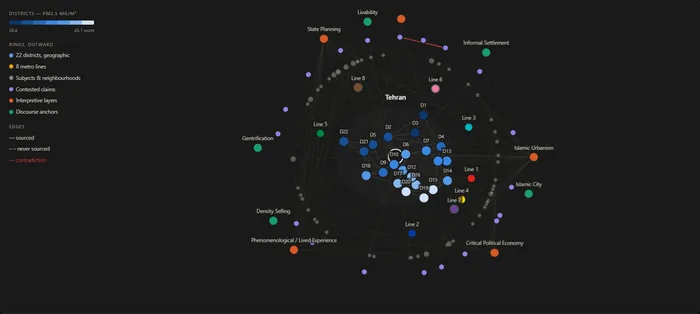
این پروژه میکوشد ادعاهایی را که پژوهشهای شهری فارسی و انگلیسی دربارهٔ تهران مطرح کردهاند به گرافی دانشی تبدیل کند که هر ادعا را همراه با عبارت اصلی منبع، نقش آن عبارت در مقاله و سابقهٔ داوریاش نگه میدارد. در این گراف اختلافنظرها حذف نمیشوند؛ هر جا منابع یا چارچوبهای تفسیری با یکدیگر همسو نیستند، هر دو موضع در کنار هم ثبت میشود. هیچ خروجی مدل مستقیم وارد گراف نمیشود: هر ادعای پیشنهادی در گامی جداگانه با عبارت شاهدش سنجیده میشود و باید از قاعدههایی صریح بگذرد که در کد بررسی میشوند.
Urbanus turns what Persian and English urban research claims about Tehran into a knowledge graph in which every claim keeps its verbatim source passage, the role that passage plays in its paper, and its review history. Disagreement is not resolved away: where sources or interpretive lenses conflict, both positions are recorded side by side. No model output enters the graph directly: each proposed claim is judged against its evidence passage in a separate step and must pass explicit rules that are checked in code.
- ۵۲۳523مقالهٔ فارسی و انگلیسیpapers
- ۸۳۳833ادعای داوریشدهgoverned claims
- ۶۵65محله در ۲۲ منطقهneighbourhoods
- ۲۳23پرسش سنجشcompetency questions
ایده و تصمیمهاIdea and decisions
ایده و چارچوب نظری، یعنی نگهداشتن خوانشهای رقیب در کنار هم، از من است. دامنهٔ پیکره، مفاهیم مناقشهبرانگیز و قاعدههای داوری را من نوشتم، هر مرحله را طراحی و هدایت کردم، دستورکارها را تأیید کردم و موارد مبهم را خودم تصمیم گرفتم.
The idea and its framework, keeping rival readings side by side, are mine. I wrote the scope of the corpus, the contested concepts and the rules of review, designed and directed each stage, approved the briefs and decided the open cases myself.
ابزار و روشTools and method
برای ساختن گرافی در این مقیاس در زمانی محدود، مدلهای زبانی را بهعنوان ابزار به کار گرفتم، نخست یک مدل محلی و سپس Claude: کدها، استخراج ادعاها از ۵۲۳ مقاله، سنجش هر ادعا با عبارت شاهدش و بازبینیهای نمونهای با آنها انجام شد. هیچ خروجی مدل بیگذر از قاعدههایی که در کد بررسی میشوند وارد گراف نمیشود، و جایی که دانش فنی من کم بود ابزار آن را پر کرد.
To build a graph at this scale in limited time I used language models as the tool, a local model first and then Claude: the code, the extraction of claims from 523 papers, the check of each claim against its evidence passage and the audit passes were done with them. No model output enters the graph without passing rules checked in code, and where my technical knowledge ran short the tool filled it.
- گردآوری پیکرهCorpus
مقالههای فارسی و انگلیسی دربارهٔ شهرسازی تهران از پایگاههای دسترسی آزاد گردآوری شد.
Persian and English papers on Tehran’s urbanism, gathered from open-access databases.
- غربالگریScreening
هر مقاله از نظر موضوع، مکان و مقیاس فضایی سنجیده شد تا تنها پژوهشهای شهری مربوط به تهران باقی بماند.
Each paper screened for subject, place and spatial scale.
- استخراج ادعاExtracting claims
یافتهها از متن کامل مقالهها استخراج شد و هر نقلقول بهطور خودکار با متن اصلی تطبیق داده شد.
Findings extracted from full texts; every quote checked against its source.
- داوریReview
هر ادعا بر پایهٔ عبارت شاهد خود پذیرفته، اصلاح یا رد شد.
Each claim accepted, revised or rejected against its evidence passage.
- ثبت مناقشهHolding disagreement
مفاهیم مناقشهبرانگیزی چون بافت فرسوده و فروش تراکم با هر دو خوانش ثبت میشوند.
Contested concepts, such as worn-out fabric and density selling, kept with both readings.
- پیوند مکانیSpatial linking
ادعاها به فرهنگی جغرافیایی از محلهها و مناطق ۲۲گانهٔ تهران پیوند داده شدند.
Claims linked to a gazetteer of Tehran’s neighbourhoods and 22 districts.
- آزمونTesting
مجموعهای از پرسشهای سنجش، درستی گراف را پس از هر تغییر میآزماید.
A suite of competency questions tests the graph after every change.
وضعیت: تاکنون ۸۳۳ ادعا از ۲۱۰ مقالهٔ سطح محله و منطقه وارد گراف شده است و استخراج ۲۴۰ مقالهٔ سطح شهر گام بعدی است.Status: 833 claims from 210 neighbourhood and district papers are in the graph; city-level extraction of 240 papers comes next. Tools: OpenAlex, LinkML, RDF and SPARQL, Python.